

Psilocybin
Learn more about psilocybin, the compound found naturally in "magic mushrooms."
This content is made in collaboration with Blossom.
Overview
Common Nicknames
Magic mushrooms, shrooms, mushies, buttons, caps
Drug Class
Psychedelic
Drug Form
Mushroom (fresh or dried), powder, tea, synthesised capsule (in clinical settings)
Route of Administration
Oral

What is the science of Psilocybin?
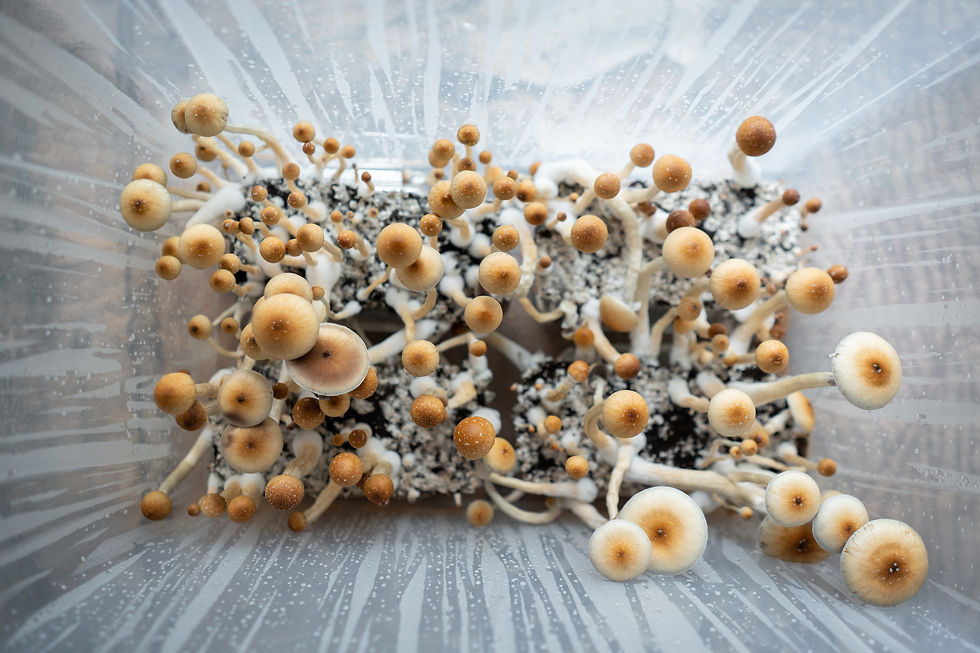
Psilocybin mushrooms are naturally occurring mushrooms containing the psychoactive compound psilocybin. More than 180 psilocybin containing species are found worldwide and can produce hallucinogenic effects when consumed. Psilocybin is converted by the body to psilocin, and this is the actual compound which produces their psychoactive effects. Small amounts of related compounds, baeocystin and norbaeocystin, are also usually present, though their contribution to the overall effect is unclear.
Psilocybin and psilocin are known as psychedelic tryptamines, and they have very similar molecular structures to a key chemical messenger called serotonin. Serotonin plays a major role in regulating mood, sleep and how we cope with stress. Because psilocin looks so much like serotonin, it can activate the same receptors in the brain, especially a subtype known as 5-HT2A. This receptor is heavily involved in mood, imagination, and learning and perception. Research into psilocin's binding profile shows it also acts, to a similar degree, at two further serotonin receptor sites, 5-HT2C and 5-HT1A, meaning its effects come from more than one receptor working together rather than a single "on switch."
A large share of 5-HT2A receptors are located on long cells in the cortex, the part of the brain associated with reasoning and rational thought, which is part of why activating them has such a wide reaching influence on brain activity. Psilocin sits into these receptors and activates them, thereby producing the characteristic ‘trip’ of a magic mushroom experience, which can include changes in mood, imagination and perception. Recent research has also shown psilocin has an effect on a part of the brain known as the Default Mode Network (DMN).
Our DMN’s are like our brain’s main information highways. They act as consolidation centres while we go about our daily lives, compiling information quietly in the background. They also allow us to ‘time travel’ in our minds, giving us the ability to think back to the past and plan into the future. Some also theorise our DMN’s are home to our individualities; that they house our senses of ‘self’.
Psilocin temporarily disables one or more of the DMN’s ‘connector hubs’. This temporary shutdown of our brain’s main information highway means the brain cannot connect with the different parts of itself like it usually does, and is instead forced to connect in ways it does not usually. This means the brain starts communicating with parts of itself it doesn’t normally ‘talk’ to, which means the brain creates new connections while under the influence of psilocin.
Animal studies have found that a single dose can trigger a rapid increase in the density of connections between brain cells in the frontal cortex, an effect that can persist for weeks. This is one of the leading theories for why the effects of a psilocybin experience can outlast the drug itself, though this work is still at an early, mostly preclinical stage and our understanding of exactly how psilocin reshapes the brain is far from complete.
What are the risks?
The main risk of psilocybin is having a difficult or ‘bad trip.’ A bad trip can encompass a range of unpleasant experiences, like acute anxiety, feeling deeply uncomfortable in your body or surroundings, struggling to communicate, and losing touch with what is real. Losing touch with reality is the most dangerous of these, because it becomes very hard to think or act "normally," and if this happens somewhere that requires you to stay alert and coordinated, such as a busy street, a crowd, or somewhere high up, there is a real risk to physical safety.
Under supervised conditions, the most commonly reported effects are headache, nausea, fatigue, dizziness and short lived rises in blood pressure, and these usually settle on their own within about 48 hours. Serious medical intervention is rarely needed, but psilocybin does still call for care: it is not something to assume is automatically benign just because it is "natural."
Mental health vulnerability
Compared with legal drugs like alcohol and nicotine, which cause considerable physical harm to the body, psilocybin carries a low risk of direct physical harm. The much more significant risk sits with mental health. Because psilocybin produces a potent hallucinogenic state, people with a personal or family history of psychosis, schizophrenia or bipolar disorder should avoid it, since the experience can bring on or worsen symptoms. Serious adverse events in clinical trials are uncommon overall but tend to occur in people who already have a psychiatric condition rather than in healthy volunteers, and studies in depression have reported instances of suicidal thinking, which is part of why careful screening matters so much before anyone uses psilocybin, particularly at higher doses or in an unsupported setting.
HPPD and ‘flashbacks’
HPPD (Hallucinogen Persisting Perception Disorder) is a very unusual and poorly understood harmful effect of having taken hallucinogenic drugs. There are few or no good quality formal accounts of psilocybin causing HPPD (LSD is more commonly the cause) but it likely to be possible, and could go unrecognised.
It is most often experienced as re-appearance of some of the effects experienced during the previously occurring hallucinogenic drug experience after some time without the drug. In most cases HPPD follows a traumatic hallucinogenic drug experience (‘bad trip’). In some cases, sufferers may feel detached from normality or the world.
HPPD has been reported occasionally as longer-lasting, though complete or partial recovery usually occurs after weeks or months. Lingering HPPD has been associated mostly with LSD rather than psilocybin, and often involves higher doses and drug combinations. This kind of HPPD may occur in people with underlying psychiatric conditions or genetic vulnerabilities, but the evidence is very incomplete.

How might the drug make you feel?
Psilocybin mushrooms produce changes in a user’s consciousness, mood, perception and sensory experience. These changes are classically known as a psychedelic ‘trip’, and can last anywhere between 2–6 hours. The intensity of the trip is directly related to the dose consumed and the strength of the mushrooms in terms of their psilocybin content.
A commonly reported effect is that the mind seems to become more open under the influence of psilocybin and sensory experience can become very intense.
This means things which a person would normally find aesthetically pleasing (art, nature, music etc) can become far more beautiful on psilocybin than when sober, but it can also mean that normal sensory experience can become overwhelming. Being in a crowded place like a street or a nightclub, for example, can become difficult because of the sheer amount of sensory input which can easily overwhelm the mind and the senses. The optimum physical setting for a psilocybin mushrooms experience is somewhere comfortable and familiar, where the amount of sensory input is low or can be controlled, like at home or in a peaceful open space.
Key effects of the experience include thinking in new, interesting or peculiar ways; having emotions far more connected to sensory experiences; having your gaze directed inward toward your own emotions or character; experiencing time distortions; experiencing visual and auditory hallucinations; and, at very high doses, experiencing ego death.
Given that psilocybin seems to connect parts of the brain in novel and interesting ways; different, fascinating, odd and sometimes scary ways of thinking can present themselves to the user. There is little one can do to predict the ways a psychedelic trip will go, and the best practice is to ensure a positive mindset and comfortable setting prior to the trip.
Hallucinations can occur based on the strength, type and dosage of the magic mushroom consumed and can include changes in perception of sounds, closed-eye visuals and open-eye visuals.
Closed-eye visuals can range anywhere from seeing fractal patterns and vivid colours to experiencing dream-like sequences and deeply-set memories, all with your eyes closed. Open-eye visuals can include hallucinations of your environment, like colours becoming much more vibrant, surfaces seeming to ripple or ‘breathe’ before your eyes, patterns forming, moving or rotating as you observe and much more. At higher doses objects and environments may morph into different things and you may experience things that are not really there.
Auditory hallucinations can include sounds becoming clearer, crisper or more distorted or layered with meaning. The perception and appreciation of music or words/language can also change.
At very high doses users may experience something known as ego death. This is an intense experience when your sense of self can (seemingly) cease to exist, which can be frightening, strange, or enlightening, or all three. A high dose is not recommended, especially to first time users or those not overly familiar with the trip, as ego death can be a very intense experience.
Is Psilocybin addictive, and what are the long-term effects?
Psilocybin mushrooms appear to have a very low potential for addiction. There have not been any significant cases of people becoming detrimentally addicted to them. Unlike drugs such as cocaine or MDMA, psilocybin molecules do not appear to change the brain's supply of its own neurotransmitters, nor do they force the brain to release its existing stores of serotonin. Instead, they work by directly activating 5-HT2A receptors while leaving the body's natural serotonin supply untouched, which limits the kind of up or down regulation that tends to drive physical dependence.
The body also has a high tolerance for repeated use of psilocybin mushrooms. A user consuming psilocybin one day would have a far diminished effect consuming the same amount the next day. The body’s ability to quickly create a high tolerance for psilocybin means there is a low potential for addiction. This rapid tolerance is itself a natural brake on frequent use and contributes to psilocybin's low addictive potential. Compared with substances like opioids, stimulants or alcohol, its overall dependence liability is considered low, and there is little evidence of a classic withdrawal syndrome when use stops.
Harm Reduction and Drug-Drug Interactions
Magic mushrooms carry relatively low risk to physical health compared with many other drugs, largely because they are not considered addictive and are rarely used on a regular basis. That said, a psychedelic trip can still produce an overwhelming and intensely unpleasant experience, so if you are going to use psilocybin, a few safety practices are worth following.
Making sure you have the right mushrooms
Psilocybin mushrooms can sometimes look similar to other non-psilocybin mushrooms. Getting psilocybe mushrooms mixed up with other mushrooms can be harmless in the best-case scenario or fatal in the worst-case scenario.
Poisonous varieties of mushrooms do exist in nature and great care must be taken when choosing a type of mushroom to consume. This is especially a danger if a person is picking wild mushrooms without the proper knowledge or guidance.
There are also many different types of psilocybin mushrooms. Some are weaker in effect and some are stronger — even mistaking a strong variety for a weak one can have unintended consequences by making a trip more intense than anticipated.
It is imperative to know what kind of mushroom you are consuming before you consume it. If you are unsure, do not take them or consult a mycologist or someone who is familiar with varieties ad types of mushrooms.
Dosage and measurement
Dosage strongly affects both the intensity of a trip and the health risks involved. Because psilocybin mushrooms carry a low risk of physical harm, taking too much is unlikely to cause physiological damage, but it can produce an intense, unsettling experience with lasting psychological effects. Dosage differs between fresh and dried mushrooms: since mushrooms are roughly 90% water, dried mushrooms are typically around 10x more potent by weight, so a 20g dose of fresh mushrooms is roughly equivalent to 2g dried. Weighing mushrooms accurately with proper gram or milligram scales before use is an important step in getting the dose right.
Set and setting
Set refers to mindset. Psilocybin tends to amplify whatever you are already feeling, so a positive or at least neutral mindset going in matters a great deal. Anxious, fearful or otherwise negative states of mind are likely to spill over into the trip and increase the risk of a bad experience, while a positive mood is more likely to be lifted and reflected back.
Setting refers to environment. Because psilocybin opens the mind up to new sensory experiences, a loud, crowded, unfamiliar or uncomfortable environment is much more likely to lead to a bad trip, even starting from a good mindset. A familiar, comfortable setting with people you trust is key.
Tripsitter
It is good practice to have a trusted, sober person present when on a psilocybin trip. This person, known as a ‘tripsitter,’ can ensure everyone is safe, has a positive experience and can deal with any potentially situations which may arise.
Situations like these can include when a user has a bad experience and doesn’t know what’s real or not — the tripsitter can bring them back to reality and ensure them whatever they’re thinking or experiencing is not real and the drug will eventually wear off. Reassuring comments and gestures are helpful, as is making sure those who are tripping are not feeling anxious or uncomfortable.
An ideal tripsitter would be someone who has also experienced positive psilocybin trips. This means they understand the feeling of the trip and what is needed to effectively tripsit. Psilocybin can make users very sensitive to their own moods and the moods of others. Having a tripsitter who is judgemental or does not agree with consuming psilocybin mushrooms will very much negatively affect the experience of those tripping.
Killing the high
There is a common belief that sugary food or drink, sweets, carbohydrates, fruit juice, can shorten or "kill" a trip, theoretically by speeding the breakdown of psilocin in the blood. The evidence for this is weak, but if someone is having a bad trip or wants to come down sooner, consuming sugary food or drink is unlikely to cause any harm.
Drug and medication interactions
Psilocybin should not be combined with other illicit drugs, alcohol or nicotine. Drug combinations are unpredictable and can be dangerous or fatal.
Lithium is a particularly high risk combination. Case report evidence has linked using psychedelics like psilocybin alongside lithium to seizures and severe, dysphoric reactions requiring medical attention, so this combination should be avoided.
Psychiatric medications more broadly, including SSRIs, SNRIs and MAOIs, require caution. Psilocybin is thought to act on some of the same neural pathways as these medications. Clinical research suggests that combining psilocybin with SSRIs or SNRIs is often tolerated, but it can also reduce or alter the psychedelic effect, and stopping antidepressants abruptly before using psilocybin carries its own withdrawal risks. Anyone taking psychiatric medication should treat this as a real interaction to be managed carefully, ideally with medical guidance, rather than something to combine casually.
Medical Uses
Psilocybin mushrooms have potential medical uses in treating conditions such as depression, anxiety, alcohol use disorder and PTSD, along with possible therapeutic applications in counselling and grief support. Human interest in psilocybin as medicine goes back further than you might think. It was first isolated from Psilocybe mexicana mushrooms in 1958 and briefly marketed for psychiatric research before international drug control frameworks introduced in the early 1970s brought decades of restriction on clinical study. Research capacity began rebuilding from the 1990s onward and has since developed into a much more rigorous field with proper screening, safety monitoring and standardised outcome measures.
Numerous studies, notably by David Nutt and colleagues at Imperial College London, have investigated psilocybin's usefulness in treating depression, with findings showing a strong link between controlled psilocybin experiences and reduced depression symptoms, sometimes after as little as one session. Large scale trials of a standardised 25mg dose in treatment resistant depression have since reported positive results in more than one late stage clinical trial, with follow up data suggesting that a meaningful share of people who respond by six weeks maintain that improvement six months on. Regulatory review of this treatment is now underway in the United States, though it remains a treatment in development rather than an approved medicine, and any future approval would likely come with requirements for supervised, clinic-based administration, rather than take home use.
Depression is the most advanced indication, but research also spans anxiety and distress in people with life limiting illness, where early trials have shown promising results, and addiction, particularly alcohol use disorder, where psilocybin assisted treatment has shown meaningful reductions in heavy drinking over extended follow up. Work is also underway on tobacco use, opioid and stimulant use disorders, though this is at an earlier stage.
Separately, some people report using microdoses (far smaller than a psychedelic dose) for conditions like migraines and cluster headaches. Research into microdosing is still very limited, and many researchers believe reported benefits may be largely a placebo effect.
Medical use of psilocybin should only ever be carried out by registered professionals in an appropriate clinical setting. Self-directed ‘medical’ use is not a substitute for supervised treatment.

Myths and Misconceptions
Psilocybin mushrooms cause brain damage
From the 1960s there was a popular theory that psilocybin mushrooms (and drugs in general, especially hallucinogens) caused permanent brain damage from just one-time consumption.
There is no scientific evidence that this is true, and science does not show one-time or infrequent use of psilocybin mushrooms has any vastly detrimental effects on the brain. In fact, studies have even suggested psilocybin helps create and connect brain cells.
However, there are few studies showing what regular use of psilocybin does to the brain. From this respect, it is best to space trips out (3 months apart, at the least), in order to stay safe but also to maximise the positive outcomes from trips and minimise the building of physical tolerance.
Fly agaric mushrooms (Amanita muscaria) are psilocybin mushrooms
No. Fly agaric mushrooms (the fairytale toadstools with white spots on red) belong to a different family and should not be confused with psilocybin-containing mushrooms. Rather than psilocybin, the key chemicals associated with the psychoactive effects include ibotenic acid and muscimol. Effects can include twitching, drooling, sweating, dizziness, vomiting and delirium, very unlike the fairly mild physical effects of psilocybin mushrooms. Fly agaric mushrooms do not appear to be a popular recreational drug. In the UK, when the sale of fresh psilocybin mushrooms became controlled, some shops started selling dried fly agaric mushrooms as a non-controlled alternative. However, there is a risk that these types of products might contain a range of added substances, especially when powdered samples are involved. The fly agaric and commercially available products of that nature should not be considered a legal alternative to psilocybin mushrooms as their effects and risks are very different.
Legal Status and Where the Research Stands
In the UK, psilocybin is a Class A drug under the Misuse of Drugs Act 1971 and is placed in Schedule 1 of the Misuse of Drugs Regulations 2001. This means possession outside of licensed research is illegal, and even scientific or medical work requires stringent licensing. As of the most recent parliamentary statements, the Government has not indicated plans to review this classification, even as clinical research into psilocybin's medical potential continues to grow.
Internationally, the picture is mixed. Psilocybin is controlled globally under the 1971 UN Convention on Psychotropic Substances, and in the United States it remains Schedule I at the federal level, though individual states, including Oregon and Colorado, have introduced regulated access programmes. Germany has approved a time-limited compassionate use programme allowing access to psilocybin for treatment-resistant depression outside a formal clinical trial, delivered through specific, approved clinics. Australia allows specially authorised psychiatrists to prescribe psilocybin for treatment-resistant depression, and Canada has expanded physician access routes for specific circumstances, while still maintaining federal control.
None of this amounts to legal medical availability yet, but it does reflect a growing body of clinical evidence that is moving psilocybin through formal drug regulatory processes in multiple countries.
