

DMT
Learn more about DMT, the molecule found naturally in a variety of plants with a long history as the psychoactive component in ayahuasca.
Overview
Common Nicknames
Dimitri, the spirit molecule, businessman's trip
Drug Class
Psychedelic
Drug Form
Powder, drink, salt
Route of Administration
Smoked (DMT and changa), injection (salt), oral (ayahuasca)
What is the science of DMT?
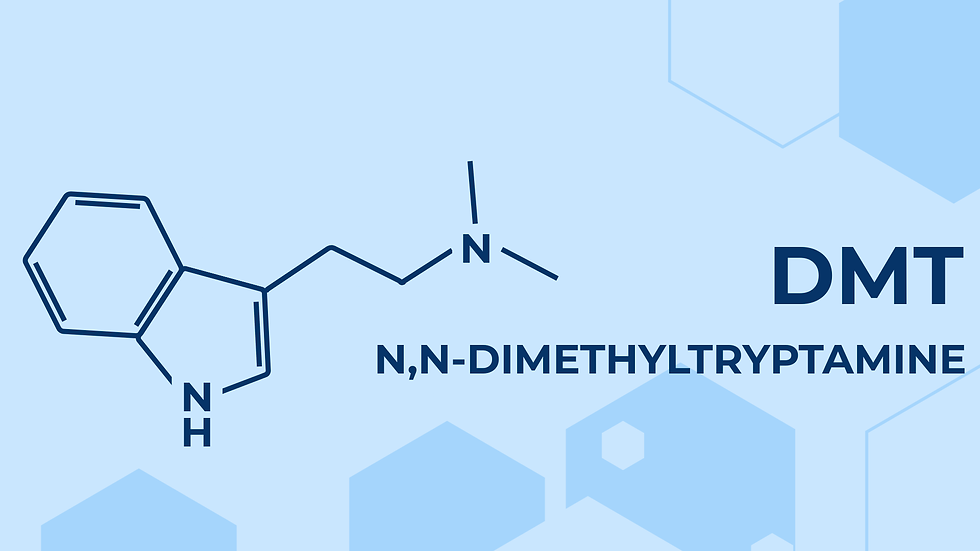
DMT stands for N, N-Dimethyltryptamine. It is a powerful psychedelic drug, with serotonergic effects on the human brain, which can induce a rapid and intense psychedelic experience, often referred to as a ‘DMT trip’. The DMT experience is usually characterised by visual hallucinations, frequently involving powerful entities, and is often associated with deeper meaning. This meaningful experience is sometimes called a ‘DMT breakthrough’. When used as a recreational drug, DMT can be smoked, snorted, or injected in its crystal form.
DMT is a psychedelic tryptamine. It is an indole alkaloid and has a chemical structure similar to the neurotransmitter serotonin. This similarity in structure between DMT and serotonin allows it to bind to serotonin receptors. Specifically DMT acts as an agonist of the 5-HT2A receptor, whereby it binds and stimulates a response. It is thought that 5-HT2A receptor agonism plays a major role in the hallucinogenic effects of DMT. The 5-HT2A receptor is associated with several other classical psychedelics, including psilocybin and LSD, and consequently these psychedelics can often be referred to as serotonergic psychedelics.
What are the risks?
DMT is a powerful psychedelic drug and, as with any drug, it’s important that there is an appreciation for both the psychological and physiological risks associated with its use.
DMT induces a particularly potent psychedelic experience consisting of intense visual alterations and hallucinations, alongside alterations in emotion and mood. The intensity of the trip can be emotionally challenging for some people, inducing states of panic, anxiety and paranoia. For some people DMT produces an out-of-body experience or depersonalisation, which can be an overwhelming experience. Similar to all psychedelics, the psychological risks can be minimised by ‘set and setting’, ensuring that both your mind-set is stable and well prepared, and that the environment is safe and encouraging. A sober sitter is an important safety measure to mitigate psychological harm.
Similar to other psychedelics, history of mental health illness (such as schizophrenia, psychosis and bipolar disorder) may increase the likelihood of an unpleasant experience and there is the risk DMT may exacerbate these conditions. However, there is still a limited understanding of the risks associated with the use of psychedelics in those with pre-existing mental health conditions.
It’s important to understand that DMT affects the serotonin system and therefore should not be taken in consumption with other drugs that also alter the serotonin system. This can result in a potentially life-threatening condition called serotonin syndrome. This includes some antidepressants and selective serotonin reuptake inhibitors (SSRIs).
Prescription drugs with an associated risk:
SSRIs
Antipsychotics (although many will also block the actions of DMT)
Opioids, especially
Antihypertensives
Central nervous system depressants
Vasodilators

How might the drug make you feel?
Psychological effects
DMT is rapidly acting and effects are typically observed around 2-5 minutes after consumption and last around 15-20 minutes. Despite its short-lived effects, DMT is known as one of the most powerful psychedelic drugs. The subjective effects of DMT can often be meaningful but will vary with dosage. These include:
Eliciting intense visual alterations and hallucinations, specifically colourful and geometric forms
Profound spiritual or mystical experiences
Varying alternations in mood and emotion, including experiences of euphoria, calm, fear and anxiety
Perceived encounters with external entities, which are often described as elf-like.
Altered sense of time and place
A sense of depersonalisation or out of body experiences
Potential auditory hallucinations
Evocation of powerful memories
Physiological effects
DMT is associated with low toxicity and is easily metabolised by the body. However, there are physiological implications and associated risks to be aware of. These include elevated blood pressure and increased heart rate, which is particularly risky for those with heart conditions. The impaired cognitive and motor function poses a personal safety risk and presents further reason for DMT to be consumed in a safe environment with a sober sitter. It should be noted that at high doses there are some reports of seizures, respiratory effects and comas.
Is DMT addictive, and what are the long-term effects?
DMT, along with other classical psychedelics, is not addictive. However, tolerance can develop with frequent use, whereby a higher dose is required to achieve the same effect.
Harm Reduction and Drug-Drug Interactions
DMT is a powerful psychedelic drug that can produce a rapid and intense hallucinogenic experience. Informed harm reduction advice can help to mitigate some of the associated risks.
Being educated and prepared
It is important that you fully educate yourself on the health risks and drug interactions associated with DMT. It is important to ensure that the correct form and method of consumption is used, as well as a suitable dose. The particularly intense nature of DMT makes it important that sufficient preparation is done. This includes an awareness of the psychological and physical effects that DMT may induce. Preparation is also linked to the person’s mind-set.
Set and setting
‘Set’ refers to a person’s mind-set including their mood, thoughts and expectations. This can have a significant effect on the experience of the trip and therefore it is advised that DMT is only consumed when a person is in a positive and stable state of mind. ‘Setting’ refers to the environment and social situation in which the drug is consumed. DMT should be consumed in a safe and calm environment, due to the intensity of the trip and the potential motor impairments.
Sitter
The presence of a sober sitter is particularly recommended with DMT. The sitter can provide reassurance and support during and after the trip. The sobriety of the sitter is essential and can provide a sense of clarity and guidance through any disorientating or overwhelming experiences.
Drug-Drug Interactions
DMT should not be mixed with alcohol or other drugs and an understanding of the effects and mechanism can provide insight into the risks associated with mixing it with other drugs.
Key drug combinations to avoid are listed below:
DMT shouldn’t be mixed with tramadol due to the increased risk of seizure
DMT shouldn’t be mixed with other stimulants including cocaine and amphetamines
DMT shouldn’t be mixed with cannabis
DMT is a powerful psychedelic and mixing it with other hallucinogens carries the risk of making the trip more intense
DMT shouldn’t be mixed with any recreationally used prescription drugs that are known to potentially interact with it. This includes all those listed above

Medical Uses
DMT, when consumed in the form of ayahuasca, has a long history of traditional medicinal use for numerous indigenous tribes across the Lower and Upper Amazon. The therapeutic potential of ayahuasca as a therapy tool in psychotherapy has generated significant clinical interest and several clinical trials have reported beneficial effects in the treatment of addiction and depression.
The growing mainstream appreciation for the therapeutic potential of ayahuasca (DMT-containing brew) and other classical psychedelics has generated increased scientific interest as to whether DMT has therapeutic potential. Scientific studies have demonstrated similarities between DMT and psilocybin, whereby DMT is able to produce a comparable mystical experience to that of psilocybin. It is suggested that psilocybin alters brain activity and enables the brain to reset. Therefore, recent evidence that DMT causes changes in human brain activity could be of therapeutic value. These similarities suggest that DMT may have a similar therapeutic potential to psilocybin in treating psychiatric disorders such as depression and anxiety.

Myths and Misconceptions
The human brain produces DMT
There has been extensive debate as to whether DMT is produced in the human brain. A lot of the debate has been focused around the pineal gland, a tiny organ in the centre of the brain, which had been popularised by many as the primary producer of DMT. However, currently scientific evidence to support this theory remains very limited.
Trace amounts have been detected in human blood and urine, supporting the idea of the endogenous production of DMT in the human body. Although a recent study detected DMT in the pineal gland of rats, there has been no evidence of this in the pineal gland of the human brain. A subsequent study demonstrated that DMT is still produced in the rat brain after removal of the pineal gland, adding further fire to the debate as to whether the pineal gland is the primary source of DMT. Understanding endogenous DMT production in the human body and its potential roles in physiology remains an understudied area and extensive further studies are needed.
DMT and 5-MeO-DMT are similar
5-MeO-DMT stands for 5-Methoxy-N,N-Dimethyltryptamine. While they may look similar, and have similar chemical structures, they induce different experiences and should not be confused. For more information on 5-MeO-DMT click here.
